Camera-specific lens buying guide
Best Portrait Lenses for the Sony a7 III: Used Buying Guide
A useful Sony a7 III portrait lens is not simply the fastest prime or the most expensive GM option. The right focal length depends on the room you shoot in, how much of the environment you want in the frame, and the distance you can maintain from your subject. This guide narrows the native Sony E-mount used catalog to portrait-relevant choices and makes it easier to compare available buying options.
Mirrorless Lens World editorial research uses camera-compatibility records, manufacturer-described lens specifications and refreshed retailer listings. Products here have not been represented as personally hands-on tested. Affiliate links may earn us a commission at no extra cost to you.
The short answer
What should you buy first?
For traditional head-and-shoulders portraits, start by comparing full-frame 85mm options. A 50–55mm prime is more practical in tighter rooms and for half-body portraits, while 35mm can include more of the setting. A portrait zoom may make more sense if you also photograph events or want to change composition without switching lenses.
Compatible, currently eligible buying options
Compare the starting prices and trade-offs
These are camera-compatible lens families ranked from the requested photography use and budget. The figures are starting prices for eligible individual listings, not a guarantee that every condition grade is available at that price. Confirm stock and terms before buying.
| Lens | Focal length | Sensor coverage | Starting offer | Retailers |
|---|---|---|---|---|
| Sony FE 85mm f/1.8 Full-Frame Autofocus Lens | 85mm | Full Frame | $280 | KEH + eBay |
| Sony FE 50mm f/1.8 Full-Frame Autofocus Lens | 50mm | Full Frame | $132 | KEH |
| Sony FE 85mm f/1.4 GM Full-Frame Autofocus Lens | 85mm | Full Frame | $917 | KEH |
| Sony FE 135mm f/1.8 GM Full-Frame Autofocus Lens | 135mm | Full Frame | $796 | KEH + eBay |
| Sony FE 35mm f/1.8 Full-Frame Autofocus Lens | 35mm | Full Frame | $424 | KEH |
Original comparative buying analysis
Head-to-head: which trade-off makes sense?
These comparisons explain distinct purchase decisions using documented focal lengths, aperture characteristics and camera compatibility. They are not numerical optical-test results, and the precise retailer listings still need inspection.
Sony FE 85mm f/1.8 vs Sigma 85mm f/1.4 DG DN Art
Choose the first when: Choose the Sony FE 85mm f/1.8 if you want a dedicated portrait prime without committing to an especially large or costly professional lens.
Choose the alternative when: Consider the Sigma 85mm f/1.4 DG DN Art if wider maximum aperture and its different rendering priorities justify the additional weight and asking price.
Both are native full-frame E-mount 85mm primes: subject distance and framing are broadly comparable. The f/1.4 maximum aperture admits about two-thirds of a stop more light than f/1.8, but portrait lighting, focused-eye accuracy and shooting distance remain consequential.
What to check before paying: Compare the condition-adjusted used price, carrying weight, autofocus behavior on your body and whether you actually shoot wide open. An f/1.4 specification alone does not establish better real-world portraits.
Sony FE 50mm f/1.8 vs a dedicated 85mm portrait prime
Choose the first when: Choose the FE 50mm f/1.8 for family photographs, indoor spaces and portraits that also show the surroundings.
Choose the alternative when: Choose an 85mm prime when you can stand farther away and want tighter framing with less of the environment included.
These lenses solve different space and composition problems; the 50mm is not simply a cheaper version of the 85mm. Moving close to fill the frame with the shorter lens changes perspective.
What to check before paying: In a small room the 85mm may be inconvenient; outdoors the 50mm may require more cropping for a tight headshot. Check availability in the condition grade you can afford.

Choice 01 · Classic portrait prime
Sony FE 85mm f/1.8 Full-Frame Autofocus Lens
The 85mm focal length supports tight portraits from a comfortable subject distance on this camera. It balances portrait-friendly framing with a practical used-buying starting point.
Important trade-off: You will need more room to frame groups or full-length subjects than with a 50mm lens. Check focusing and actual used grade before paying a premium.

Choice 02 · Flexible normal prime
Sony FE 50mm f/1.8 Full-Frame Autofocus Lens
A 50mm prime is easier to use in smaller rooms, family settings and portraits that include some environment. Its framing is more versatile as an everyday companion than a dedicated longer portrait lens.
Important trade-off: To frame a tight headshot you may need to move closer or crop. Avoid working so close that camera position exaggerates facial perspective; verify aperture and condition.
Choice 03 · Fast portrait prime
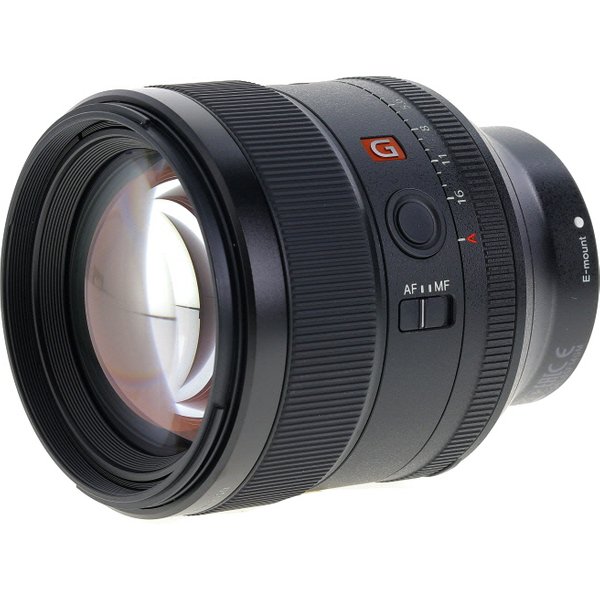
Sony FE 85mm f/1.4 GM Full-Frame Autofocus Lens
The 85mm focal length supports tight portraits from a comfortable subject distance on this camera. Its wide maximum aperture offers more separation options, especially when the background is distracting.
Important trade-off: You will need more room to frame groups or full-length subjects than with a 50mm lens. Check focusing and actual used grade before paying a premium.
Choice 04 · Longer-working-distance portrait
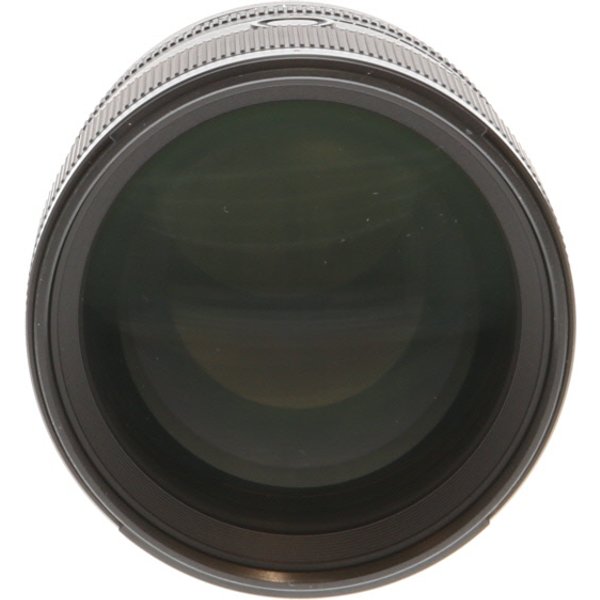
Sony FE 135mm f/1.8 GM Full-Frame Autofocus Lens
The 135mm focal length lets you isolate subjects from farther away and keep more separation from a busy background, useful for outdoor portraits and certain events.
Important trade-off: A longer focal length needs extra shooting room and can be awkward in homes or small studios. Consider bulk and handholding before buying it as a sole portrait lens.

Choice 05 · Environmental portrait option
Sony FE 35mm f/1.8 Full-Frame Autofocus Lens
The 35mm perspective makes more room for the person and their surroundings, especially valuable in travel, street and workplace portraits.
Important trade-off: Avoid very close facial framing with a wide-angle lens. Perspective depends on camera distance; keep some separation from the subject when natural facial proportions matter.

Choice 06 · Event and portrait zoom
Tamron 35-150mm f/2-2.8 Di III VXD Full-Frame Lens
The 35–150mm range gives framing flexibility when the subject moves or you cannot swap lenses, making it a useful alternative to several fixed focal lengths.
Important trade-off: Compare carrying weight, aperture at your portrait focal length and the condition of the zoom mechanism. A fixed prime may offer a lower-cost bright-aperture option.
Buying analysis
How to choose the right option
85mm portraits versus 50mm everyday portraits
An 85mm lens makes tighter framing practical from a comfortable distance. It is often easier to avoid the exaggerated near-camera perspective that comes from filling the frame with a wide lens at very close range. But 85mm can be frustrating in a cramped apartment, small studio or restaurant. Check the available working distance before making it your only portrait focal length.
A 50mm or 55mm prime covers portraits, everyday photographs and many indoor situations with fewer steps backward. For environmental portraits, a 35mm lens lets the location communicate something about the person. Avoid treating any of these focal lengths as universally flattering: framing, camera distance and lighting matter too.
Aperture, autofocus and used-condition trade-offs
f/1.8 is already a bright maximum aperture for portraits and allows shallow depth of field with careful subject distance. Faster f/1.4 options can provide greater flexibility but may carry higher used prices and more bulk. At close working distances, depth of field can become too thin for both eyes to remain sharp; stopping down is frequently the more reliable choice.
The a7 III uses Sony E mount. Choose native full-frame FE coverage to retain the full image area. Some APS-C E-mount lenses physically attach but do not provide full-frame coverage without crop behavior. On a used autofocus lens, review focus operation, optical haze or fungus, front and rear element condition and included hood before comparing prices.
Which portrait setup should you actually buy?
If you photograph individuals outdoors and already own a general zoom, a dedicated portrait prime is a sensible second lens. For family photography indoors, favor a normal prime or a versatile zoom first. If your work mixes portraits with weddings or events, flexibility and autofocus behavior may matter more than an extreme maximum aperture.
Our shortlist below is based on compatible current catalog families and recorded use-case signals, not a claim that every product was laboratory-tested. The final KEH or eBay listing may differ by condition, accessories, price, warranty and shipping.
Used-gear purchase checklist
Before you leave for the retailer
A low listed price is only useful when the exact copy meets your condition and compatibility expectations. Compare these five considerations when choosing between offers.
- Model and mount: Confirm the complete manufacturer model, native fit, image coverage and whether a listed variant needs an adapter.
- Glass and operation: Review descriptions of haze, fungus, scratches, autofocus, aperture behavior, stabilization and zoom or focus ring operation as applicable.
- Condition versus savings: Compare actual seller grades, not only the lowest number; a cleaner unit can be a better purchase for a modest premium.
- What's included: Check hood, caps, collar, pouch and filter threads against the specific product listing.
- Total purchase terms: Review shipping, returns, seller protections and availability at checkout. A listing can sell between our feed refresh and your visit.
How we selected these recommendations
We identify native, camera-compatible lens families, evaluate the photography-use signals where applicable, and include only families with an eligible recently imported KEH buying option or qualifying recent eBay listing. Recommendations and starting prices can change with the feed. No fabricated benchmark, laboratory score or personal-testing claim is used.
- Native Sony E compatibility and full-frame coverage
- Portrait-relevant focal length and available used-market condition grades
- Buying options with currently eligible KEH or recent eBay listings
Read our editorial policy and affiliate disclosure. For used gear condition checks, see our used-lens buying checklist.
Sources and verification
Review responsibility: Mirrorless Lens World Editorial Desk. Technical and purchasing advice was reviewed October 3, 2026. Retailer inventory is checked separately when the page is requested; this date does not assert each seller's offer was re-reviewed manually.
Mount, camera format and adapter guidance can be checked against the manufacturer's own documentation. Individual lens specifications are cross-checked against the imported merchant catalog; actual price and condition must be verified on the destination retailer listing. We do not claim to have personally tested these lenses.
Frequently asked buying questions
Is an 85mm lens too long for indoor portraits on a Sony a7 III?
It can be in a small room. Check how far you can stand from the subject; a 50–55mm lens is often easier indoors.
Can I use Sony APS-C E lenses on the a7 III?
E-mount lenses can physically fit, but APS-C designs generally require crop behavior to avoid dark corners. Full-frame FE coverage is the safer default for this guide.
Is a used f/1.8 portrait prime a sensible alternative to f/1.4?
Yes for many buyers. Compare autofocus, working distance, condition and actual price; a larger aperture does not automatically improve every portrait.
Keep comparing compatible lenses
Not finding the preferred price, aperture or focal length? Expand to the full camera-specific shortlist and inspect the exact seller conditions.