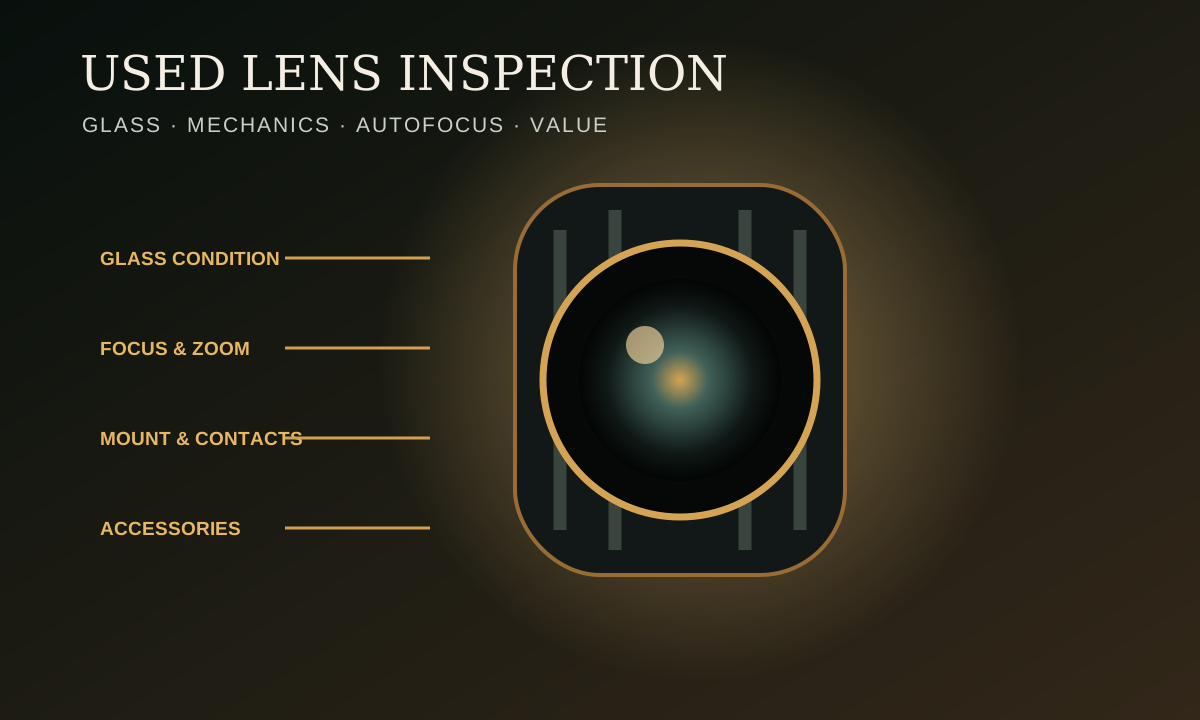
A used lens can deliver the same photographs as a new copy for substantially less money, but the lowest price is not automatically the best value. The real decision combines compatibility, optical condition, mechanical reliability, accessories, return protection and current market context.
Begin with compatibility before condition
A beautifully preserved lens is still the wrong purchase when it does not fit the camera or forces an unwanted crop. Confirm the mount, sensor coverage, adapter requirement, autofocus support and stabilization behavior before evaluating cosmetic condition.
This ordering prevents a common shopping error: becoming attached to a low price and then trying to make the lens fit the camera. Use the Lens Finder first, then compare compatible product families and offers.
Condition grades are useful only when their definitions are known
Retailers use labels such as excellent, very good, bargain, good or well used. Those labels are not standardized. One retailer may grade primarily by cosmetics, while another combines cosmetics and function. Marketplace sellers may invent their own language.
Read the definition attached to the grade. Determine whether the retailer tests autofocus, aperture and stabilization, whether the grade allows glass defects, and whether photographs show the actual copy or a representative product.
A lower cosmetic grade can be excellent value when the glass and mechanics are sound. A clean barrel should not distract from vague functional testing.
Learn the difference between ordinary dust and serious optical defects
Nearly every used lens shows some internal dust when illuminated with a strong light. Small particles rarely appear in photographs because they are far from the sensor plane. The serious concerns are haze, fungus, element separation, deep scratches and coating damage.
Haze can lower contrast across the frame. Fungus may appear as threads, webs or branching patterns and can spread in poor storage conditions. Separation can create rainbow-like edges or irregular patches where cemented elements begin to part. Deep scratches and coating damage can increase flare.
Use a small light from several angles rather than pressing it directly against the glass. Then make photographs with a bright light near the edge of the frame and with an evenly detailed subject. Sample images reveal practical consequences better than an inspection light alone.
Find a compact lens inspection lightMechanical testing should cover the entire operating range
Rotate the zoom and focus rings slowly through their complete travel. Resistance should be reasonably consistent. Grinding, sudden binding or excessive wobble can indicate wear or impact damage. Extending zooms should not feel loose enough to shift under their own weight unless the design is known for normal zoom creep.
Test switches, buttons, aperture rings and control rings. Mount and remove the lens more than once. The mount should lock without abnormal movement. Bent contacts, missing screws, corrosion and impact marks deserve caution.
Zoom lenses need testing at the wide end, middle and long end. A focusing or stabilization fault can appear only at one focal length. Macro and close-focusing lenses should be tested near their minimum focus distance as well as at normal distances.
Autofocus problems can be intermittent
A single successful focus lock does not prove that the lens is healthy. Focus repeatedly from near to far, test single and continuous autofocus and try several subject distances. Listen for grinding, clicking or inconsistent motor noise.
For mirrorless lenses, test eye or subject detection when the lens is expected to support it. Video users should record focus transitions and listen to the camera audio. A lens can be accurate for still subjects while hunting or pulsing in video.
Focus-by-wire manual rings should respond consistently. Some designs change response with rotation speed, which is normal. Delayed, intermittent or dead zones are not.
Stabilization faults can be expensive
Optical stabilization normally makes some sound when it activates, but repeated clicking, visible jumps or inconsistent blur can indicate a problem. Test the same subject at several shutter speeds with stabilization on and off.
Stabilized lenses deserve a meaningful return period because faults may not appear during a quick inspection. When the camera also has in-body stabilization, verify that the combination coordinates normally.
Decentering requires a controlled test
A decentered lens can make one side or corner consistently softer than the opposite side. Do not diagnose this from one handheld photograph. Use a flat detailed subject, keep the camera square, focus carefully and compare several apertures.
Some lenses naturally have weaker corners at maximum aperture. The warning sign is strong asymmetry that remains after careful refocusing. For an expensive lens, a suspicious result is a good reason to use the return window.
Accessories change the real price
Front and rear caps are inexpensive for common lenses, but hoods, tripod collars, filter holders, drop-in filters and proprietary feet can be costly. A low-priced super-telephoto lens without its collar may cost more to complete than a higher-grade copy with everything included.
Original packaging has little effect on image quality but can improve resale value and shipping protection. A case is useful for large lenses. Add missing accessories to the comparison rather than treating them as an afterthought.
Compare offers as risk-adjusted packages
The best used-lens value balances price and uncertainty. Include the condition definition, inspection standard, warranty, return window, shipping, taxes and accessories. A slightly higher price from a retailer with clear grading and easy returns can be rational.
Price history helps establish whether the current offer is low, typical or unusually high. It does not establish the condition of a specific copy. Mirrorless Lens World should use historical pricing to frame the market and retailer details to explain the individual offer.
Compare current listings in the live used-lens catalog and review recent movement through used price drops.
Store the lens properly after purchase
Keep lenses dry, capped and away from prolonged heat. Do not seal damp equipment inside an airtight bag. In humid environments, controlled storage can reduce fungus risk and protect a growing collection.
Compare camera dry cabinetsThe final buying rule
Do not buy the cheapest copy. Buy the lowest-risk copy that fits the camera, meets the photographic need and is priced sensibly for its condition. That distinction is the foundation of useful used-lens intelligence.
A used lens can produce the same photographs as a new copy while costing less. The real task is evaluating risk, condition and total value.
Confirm compatibility first
Verify the mount, sensor coverage, adapter requirements, autofocus and stabilization before evaluating the price.
Understand condition grades
Retailers use different grading systems. Read the definition attached to the grade rather than comparing labels in isolation.
Inspect the glass description
Look carefully for fungus, haze, separation, deep scratches, coating damage and heavy internal debris. Minor dust may have little practical effect, but fungus and haze can reduce contrast and may be costly to repair.
Check autofocus and stabilization
Watch for disclosed focusing delays, hunting, unusual motor noise, failure at certain focal lengths or stabilization that clicks, jumps or fails to initialize.
Review mechanical operation
- Zoom ring movement
- Manual focus response
- Loose barrels or mount play
- Grinding or binding
- Aperture operation
- Weather-seal condition
Account for accessories
Missing caps, hoods, tripod collars, cases and filter holders can remove the apparent savings. Some proprietary accessories are expensive to replace.
Compare the real purchase price
Include shipping, taxes, warranty, return rights, accessories and any required adapter. Price history helps identify the market range but does not establish the condition of an individual copy.
Use a risk-adjusted buying checklist
- Is the grade clearly defined?
- Are optical defects disclosed?
- Does autofocus work correctly?
- Does stabilization work correctly?
- Are important accessories included?
- Is there a meaningful return period?
- Is the price reasonable for the grade?
Compare current product families and condition-grade offers in the live used-lens catalog, then review recent movement through used lens price drops.
Frequently asked questions
Common questions
Concise answers to compatibility, buying and practical-use questions readers commonly ask after reviewing the full guide.
Is it safe to buy a used camera lens?
Yes, provided compatibility, condition and seller protections are evaluated carefully. Lenses often remain useful for many years, but glass defects, autofocus faults, stabilization problems and unclear return policies increase risk.
Does internal dust affect image quality?
Small amounts of internal dust usually have little visible effect because the particles are far from the sensor plane. Haze, fungus, separation and deep scratches are more serious concerns.
How can I identify fungus or haze?
Fungus often appears as threads, webs or branching patterns. Haze looks like a diffuse cloudy layer and can reduce contrast. Use a small light from several angles and confirm the effect with sample photographs.
What is lens element separation?
Separation occurs when cemented optical elements begin to part. It may appear as rainbow-like edges, irregular patches or discoloration. Repair can be difficult or uneconomical.
How do I test autofocus on a used lens?
Focus repeatedly from near to far, test single and continuous autofocus, try several subject distances and listen for inconsistent motor noise. Video users should also record focus transitions and review the audio.
How do I test lens stabilization?
Photograph the same detailed subject at several shutter speeds with stabilization on and off. Look for repeated blur, visible jumps or unusual behavior rather than judging the system from one frame.
What is lens decentering?
Decentering is optical misalignment that can make one side or corner consistently softer than the opposite side. Test a flat detailed subject with careful alignment, stable support and several apertures.
Do cosmetic scratches on the barrel matter?
Cosmetic wear usually affects appearance and resale value more than image quality. Impact marks, loose mounts, bent contacts or damage near moving sections deserve more concern.
Which missing lens accessories can be expensive to replace?
Tripod collars, proprietary hoods, drop-in filter holders, specialized feet and cases for large lenses can be costly. Add replacement costs before comparing offers.
How important is the return period?
Very important. Some autofocus, stabilization or optical alignment faults appear only after controlled testing. A practical return window lowers the risk of buying a defective copy.
Should I buy from a retailer or a private seller?
Retailers often provide standardized grading, inspection, warranty and easier returns. Private sellers may offer lower prices but usually require more direct testing and greater tolerance for risk.
How do I know whether a used-lens price is fair?
Compare equivalent condition grades, included accessories, warranty, shipping and recent market observations. Price history describes the market range, while the individual copy’s condition determines whether the specific offer is good value.