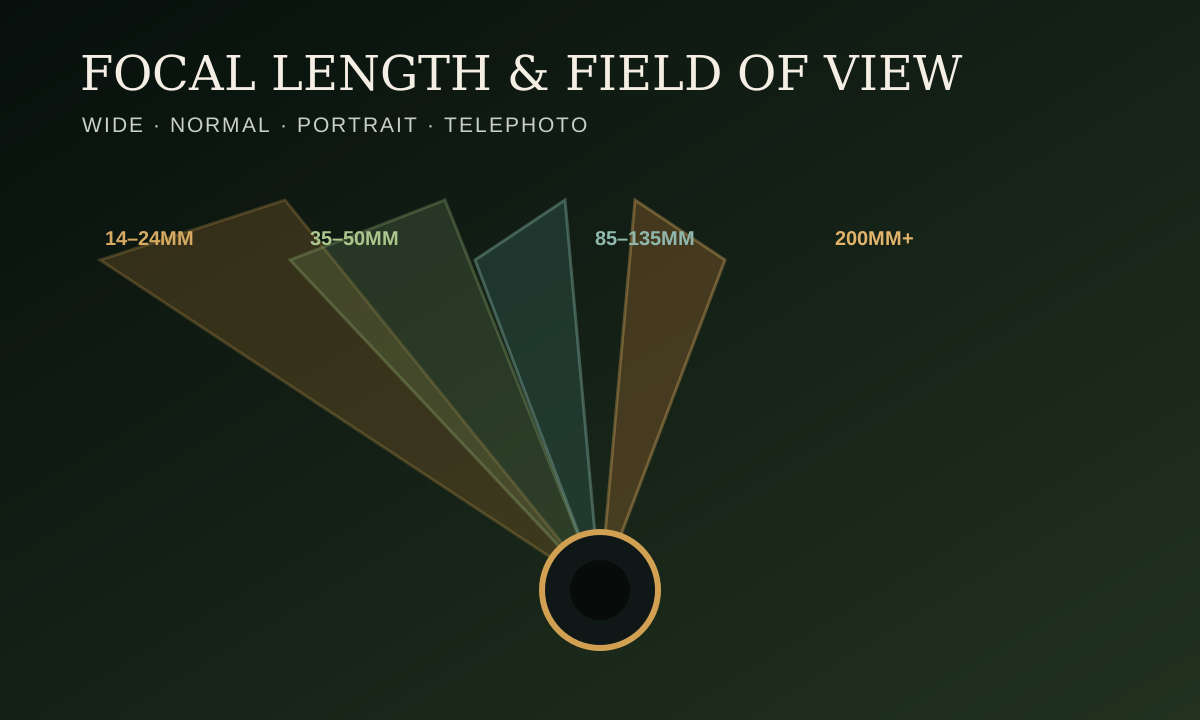
Focal length determines how much of the scene enters the frame and how far the photographer must stand from the subject. The right lens is not the most popular focal length. It is the one that creates the required field of view, working distance and handling on the camera you use.
Field of view is the practical meaning of focal length
A shorter focal length includes more of the scene. A longer focal length narrows the view and makes distant subjects occupy more of the frame. Sensor size changes how much of the projected image is recorded, so the same lens frames differently across formats.
This is why focal-length recommendations should begin with an equivalent field of view and then translate into the actual lens needed for the camera. A classic 35mm documentary view might come from a 35mm lens on full frame, roughly 23mm on APS-C or about 17mm on Micro Four Thirds.
Perspective comes from camera position
Wide lenses are often blamed for distorted faces, while telephoto lenses are said to compress distance. The deeper cause is camera position. To fill the frame with a face using a wide lens, the photographer moves close. Near features then appear much larger than distant features. To create the same framing with a telephoto lens, the photographer moves farther away, reducing those relative differences.
Choose the working distance that produces the perspective you want, then choose the focal length that frames the subject from that position. This is more reliable than choosing a lens by reputation.
Ultra-wide lenses create space and exaggeration
Ultra-wide lenses are commonly used for interiors, architecture, astrophotography, dramatic landscapes and vlogging. They can make a small room appear expansive and emphasize the distance between a foreground subject and the background.
The same exaggeration can stretch people and objects near the frame edges. Architectural users should evaluate distortion correction and corner quality. Video users should consider stabilization, filter compatibility and whether the lens is wide enough after digital stabilization or crop modes are applied.
Browse wide-angle mirrorless lensesModerate wide angles balance subject and context
Full-frame-equivalent focal lengths around 24mm to 35mm are central to travel, documentary, street and environmental portrait work. A 24mm view includes substantial surroundings. A 28mm view is still clearly wide but easier to manage. A 35mm view often feels natural because it provides context without making every composition depend on dramatic foregrounds.
These focal lengths reward movement. The photographer changes the image by stepping closer or farther rather than relying entirely on a zoom ring. A compact 28mm or 35mm-equivalent prime can become an excellent one-lens travel kit.
Normal lenses are useful because they are visually flexible
A normal field of view sits between clearly wide and clearly telephoto. Around 40mm to 60mm equivalent, the lens can cover everyday photography, family, products, street scenes, low-light work and full-length portraits.
A 50mm lens is a normal lens on full frame but a short telephoto on APS-C. That distinction explains why a “nifty fifty” can feel versatile on one camera and restrictive indoors on another. APS-C photographers looking for a classic normal view often prefer something near 30mm to 35mm.
Compare 50mm mirrorless lensesShort telephotos create comfortable portrait distance
Equivalent focal lengths around 75mm to 135mm let the photographer step back while maintaining a tight composition. This can produce flattering facial perspective and make backgrounds easier to simplify.
Working space matters. An 85mm lens can be ideal outdoors and difficult in a small room. A 50mm lens on APS-C or a 42.5mm lens on Micro Four Thirds can deliver a similar portrait field of view in a smaller system.
Maximum aperture affects subject separation, size, price and focus accuracy. An f/1.2 portrait lens offers a distinctive look but can be heavy and unforgiving. An f/1.8 lens often provides better value and handling.
Browse portrait lensesTelephoto lenses solve distance, not just magnification
Telephoto lenses are used for wildlife, sports, stage performances, aviation and compressed landscapes. They narrow the field of view so the photographer can isolate a distant subject without moving close.
Autofocus, stabilization and weight become increasingly important as focal length grows. A lens that is optically excellent but too heavy to carry or aim reliably may produce fewer successful photographs than a lighter alternative.
Maximum aperture affects shutter speed and autofocus performance, but it also affects price dramatically. Modern cameras and noise reduction make slower telephoto zooms practical for many users. Wildlife photographers should compare the complete field kit, including tripod collar, hood and support.
Compare telephoto mirrorless lensesMacro is a reproduction specification, not one focal length
A macro lens is defined by how large it can reproduce a subject on the sensor. Common macro focal lengths range from about 30mm to 150mm. Longer lenses provide more working distance, which is useful for insects, lighting and subjects that cannot tolerate a camera close to them.
Shorter macro lenses can be compact and excellent for products, documents and general photography. At close focusing distances, depth of field becomes extremely shallow, so autofocus speed and maximum aperture may matter less than focus precision and handling.
Browse macro mirrorless lensesPrime versus zoom is a workflow decision
Prime lenses offer one focal length. They can be smaller, brighter or simpler, and they encourage the photographer to learn a consistent field of view. Zoom lenses provide multiple framings without a lens change, which is valuable for events, travel and subjects where camera position is restricted.
Modern zooms can be optically excellent. The decision should not be framed as quality versus convenience. Compare aperture, size, focusing performance, minimum focus distance and the number of lenses the zoom replaces.
Build a kit around photographic problems
A first lens should cover the photographs made most often. A standard zoom is a strong starting point because it reveals which focal lengths the photographer actually uses. Review image metadata after several weeks. If many photographs cluster around one focal length, a prime in that range may be a sensible second lens.
A two-lens kit should solve two different problems. A standard zoom and telephoto zoom cover travel and events. A compact prime and ultrawide suit street and architecture. A standard zoom and macro lens serve products and close-up work. Avoid buying two lenses that duplicate the same role unless there is a clear difference in aperture, size or handling.
Translate the field of view into compatible products
Once the desired field of view is clear, select the exact camera in the Lens Finder. The tool should convert the photographic use case into mount-compatible product families and current used offers.
That final step is what makes this guide relevant to Mirrorless Lens World. The education does not end with a generic focal-length range; it leads directly into compatible inventory, condition comparison and current pricing.
Focal length determines framing and working distance. The right choice depends on the subject, sensor format and the amount of space available to the photographer.
Ultra-wide lenses
Approximate full-frame range: 10–20mm. These lenses are commonly used for interiors, architecture, astrophotography, dramatic landscapes and vlogging.
Browse wide-angle mirrorless lensesWide-angle lenses
The 20–35mm range is useful for travel, street photography, landscapes, events and environmental portraits. A 35mm lens often balances subject and context.
Normal lenses
Roughly 40–60mm on full frame works well for everyday photography, family, products, travel and low-light use.
Compare 50mm mirrorless lensesShort telephoto and portrait lenses
Approximately 70–135mm provides useful working distance and background separation for portraits, events and detail photography.
Browse 85mm portrait lensesTelephoto and super-telephoto lenses
Focal lengths from about 135mm upward are used for sports, wildlife, stage performances, aviation and distant details.
Compare telephoto mirrorless lensesMacro lenses
Macro describes reproduction capability rather than one focal length. Longer macro lenses provide more working distance, while shorter options can be compact and useful for products.
Browse macro mirrorless lensesUseful first-lens ranges
Full frame
- 24–70mm
- 24–105mm
- 28–75mm
- 35mm prime
- 50mm prime
APS-C
- 16–50mm
- 16–55mm
- 17–70mm
- 23mm prime
- 30mm or 35mm prime
Micro Four Thirds
- 12–32mm
- 12–40mm
- 12–60mm
- 17mm prime
- 20mm or 25mm prime
Choose by photograph, not popularity
Consider how close you can get, how much background should be included, available light, subject movement and the weight you are prepared to carry.
Select your exact camera in the Lens Finder to translate these focal-length ranges into compatible products.
Frequently asked questions
Common questions
Concise answers to compatibility, buying and practical-use questions readers commonly ask after reviewing the full guide.
What focal length is best for everyday photography?
A normal prime or standard zoom is usually the most flexible. Common starting points include 24–70mm on full frame, 16–50mm on APS-C and 12–40mm on Micro Four Thirds.
What focal length is best for portraits?
Equivalent focal lengths around 75mm to 135mm are popular because they provide comfortable working distance and make backgrounds easier to simplify. Available room and desired framing still matter.
What focal length is best for travel?
A compact standard zoom is the safest general choice. Travelers who value low light or smaller size may prefer a 28mm-, 35mm- or 50mm-equivalent prime.
What focal length is best for wildlife?
Wildlife commonly requires 300mm to 600mm equivalent or longer. Autofocus, stabilization, weight and the ability to carry the lens comfortably are as important as focal length.
What focal length is best for indoor photography?
Moderate wide angles and normal lenses are easier to use in confined spaces. The exact choice depends on sensor format, room size and whether the subject is a person, event or interior.
What is the difference between focal length and field of view?
Focal length is an optical property of the lens. Field of view is the portion of the scene recorded by the camera and depends on both focal length and sensor size.
Does focal length cause perspective distortion?
Camera position is the main cause of perspective differences. Wide lenses often look dramatic because the photographer moves closer, while telephoto views appear compressed because the photographer moves farther away.
Is a prime lens better than a zoom?
Not automatically. Primes can be smaller, brighter or simpler, while zooms provide framing flexibility and reduce lens changes. The better choice depends on the assignment and workflow.
What should my first mirrorless lens be?
Choose a lens that covers the photographs you make most often. A standard zoom is a strong first choice because it helps reveal which focal lengths you use before buying more specialized lenses.
How does sensor size change focal-length choice?
Smaller sensors record a narrower field of view from the same focal length. Translate the desired full-frame-equivalent view into the actual focal length required by the camera format.