Head-to-head · used lens buying intelligence
Fujifilm X-S10: Sigma 18–50mm f/2.8 vs Tamron 17–70mm f/2.8
For the discontinued Fujifilm X-S10, third-party lenses can remain useful far beyond the camera's current lifespan. Sigma's 18–50mm f/2.8 and Tamron's 17–70mm f/2.8 both offer a constant maximum aperture and native Fujifilm X-mount versions. But their physical footprints differ substantially. Sigma emphasizes compactness; Tamron extends farther at both ends and adds its own vibration compensation. This comparison focuses on the meaning of those trade-offs on the stabilized APS-C X-S10 rather than turning a product specification list into an artificial sharpness ranking.
Editorial research, not a claim of hands-on laboratory tests. We may earn a commission from qualifying retailer purchases at no extra cost to you.Which lens should you choose?
Choose Sigma's 18–50mm f/2.8 if portability and everyday 27–75mm-equivalent framing are your top goals. Choose Tamron's 17–70mm f/2.8 if the extra telephoto reach, slightly wider end and built-in VC offset its much greater carrying size. Neither is a true wildlife zoom or a replacement for an ultra-wide. Compare X-mount versions and used condition rather than similarly named lenses for other camera systems.
Street photography, smaller bags, daily family images and travel when every gram matters.
One-lens family events and travel when the wider-to-longer range and VC are worth additional size.
Specifications that change the decision
Comparison at a glance
The specifications come from manufacturer documentation. They are provided for purchase decisions, not as invented sharpness, autofocus-speed or durability test scores.
| Consideration | Sigma 18–50mm f/2.8 DC DN Contemporary (X mount) | Tamron 17–70mm f/2.8 Di III-A VC RXD (X mount) | What it means |
|---|---|---|---|
| Mount and coverage | Fujifilm X / APS-C | Fujifilm X / APS-C | Check the actual X-mount version; both lens lines exist for multiple systems. |
| Focal length | 18–50mm (roughly 27–75mm equivalent) | 17–70mm (roughly 25.5–105mm equivalent) | Tamron gives a wider start and substantially more short-telephoto reach. |
| Maximum aperture | Constant f/2.8 | Constant f/2.8 | Neither has an aperture-speed advantage at comparable focal lengths. |
| Lens stabilization | No optical stabilizer | VC vibration compensation | The X-S10 has IBIS, but stabilization and lens/body coordination should be checked by model and firmware. |
| Manufacturer weight (X version) | Approximately 285g | Approximately 530g | Sigma saves around 245g and feels lighter on a compact body. |
| Filter thread | 55mm | 67mm | Filter and accessory sizes differ. |
| Intended balance | Compact normal zoom | Extended-range stabilized zoom | The correct lens depends on whether you need the last 20mm more than a light camera bag. |
Purchasing options · verified when available
Compare current used listings
Prices below apply to the specific eligible retailer offers, not every grade or copy of the lens. KEH prices are withheld if their independently monitored feed is stale; eBay listings must meet the recent-refresh requirement. Confirm shipping, returns, accessories and final stock with the merchant.

Sigma 18-50mm f/2.8 DC DN C (Contemporary) Autofocus APS-C Lens for Fujifilm X-Mount
Currently eligible used purchasing options
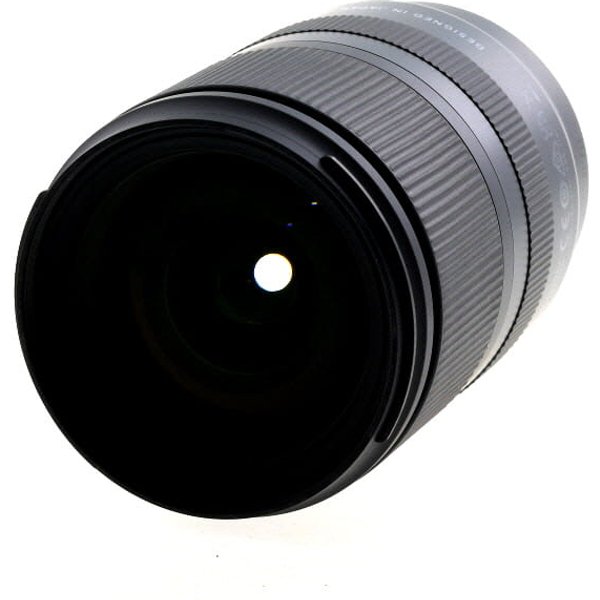
Tamron 17-70mm f/2.8 Di III-A VC RXD APS-C Lens for Fujifilm X-Mount
Currently eligible used purchasing options
Lowest tracked KEH offers: Sigma 18–50mm f/2.8 DC DN Contemporary (X mount): $604 (Excellent); Tamron 17–70mm f/2.8 Di III-A VC RXD (X mount): $610 (Excellent Plus). The listed-price difference is $6, but these may be different condition grades or include different accessories. It is not a like-for-like quality-adjusted saving. Check individual listing details and total checkout costs.
Editorial purchase analysis
Where the differences matter
A 20mm difference that changes portraits, not just numbers
At the short end, 17mm and 18mm are close but not identical on APS-C, especially in small rooms. At the long end, 70mm compared with 50mm provides a considerably tighter field of view at the same distance. For candid portraits across a family gathering, Tamron's extra reach can save a lens change or a walk toward the subject.
Sigma's 50mm long end is more limited for tight portraits and distant detail, but the smaller lens makes the X-S10 much easier to carry as an everyday camera. Neither zoom is a specialist supertelephoto. A photographer primarily capturing distant birds should allocate budget to a separate long lens rather than treating the Tamron's 70mm end as wildlife reach.
Optical stabilization does not eliminate the trade-off
The Fujifilm X-S10 has in-body image stabilization. Tamron's 17–70mm adds VC in the lens, while Sigma's 18–50mm does not. The practical shake-control benefit depends on camera, firmware, lens settings and user technique and should not be converted into an invented stop advantage. If you regularly shoot moving children indoors, the matching f/2.8 maximum apertures mean neither lens solves subject motion simply through stabilization.
Sigma's approximately 285g Fujifilm X version provides a noticeably more compact rig than Tamron's roughly 530g alternative. The Tamron has a greater zoom envelope and built-in stabilization but is significantly larger. The choice becomes especially clear on travel days when the camera is carried for hours rather than used for a few minutes.
What a used buyer should check
Verify the mount markings and seller's photographs. There are Sony E versions of both designs and the name alone does not prove Fujifilm compatibility. Tamron's lens also uses different firmware and control behavior depending on mount. Inspect focus behavior, zoom smoothness, lens contacts, electronic communication and glass clarity on the exact used copy.
A lightly used Sigma with an intact hood and caps may be a better buy than a worn Tamron unless the extra range is indispensable. Conversely, a well-kept Tamron can displace an extra travel telephoto. Compare the specific retailer grade, final shipped price, warranty or return provisions, and accessories; do not claim a winner when live offer data is absent.
Before you pay
Used-lens inspection checklist
- Confirm native Fujifilm X mount rather than Sony E or another format.
- Inspect glass clarity, smooth zoom action, AF, VC on Tamron and communication with X-S10.
- Compare full carried weight and total kit cost, including filters, hood and caps.
- Choose by actual focal range and body balance rather than a presumed sharpness score.
The exact model, optical condition, accessories, grade, warranty and seller return terms matter more than a small headline price difference. Read our complete used-lens buying guide.
Sources, methodology and verification
Mirrorless Lens World Editorial Desk reviewed this comparison on November 3, 2026, using the manufacturer documentation below and the site's native product-family catalog. Retailer data is refreshed separately. No original bench measurements or personal handling tests are claimed.
- Sigma 18–50mm f/2.8 DC DN Contemporary official specifications ↗
- Tamron 17–70mm f/2.8 Di III-A VC RXD official product information ↗
See our editorial policy and affiliate disclosure.
Frequently asked buying questions
Does Sigma's f/2.8 give less light than Tamron's?
No. Both have a constant f/2.8 maximum aperture. Their principal differences are focal coverage, size and built-in stabilization.
Will either lens cover a Fujifilm GFX camera?
No. These are APS-C Fujifilm X-mount designs, not GF medium-format lenses.
Does the X-S10 need Tamron's VC?
Not necessarily. The X-S10 already has IBIS, and the value of optical VC varies by how you shoot. Neither system freezes independently moving subjects.