Fujifilm X camera guide
Best lenses for Fujifilm X-S10 in 2026
The Fujifilm X-S10 uses the Fujifilm X mirrorless system. The current Mirrorless Lens World catalog contains 138 native lens families matched to this camera. This guide organizes the strongest current used options by general value, budget and photography purpose.
Camera + lens research, not a camera storefront. Start with a compatible lens and the photography you want to pursue. Any camera-body prices shown in future kit comparisons will be supporting data for a complete body-and-lens decision, never separate camera shopping listings.
Compatibility-first · reviewed kit research
Build a compatible Fujifilm X-S10 + lens kit
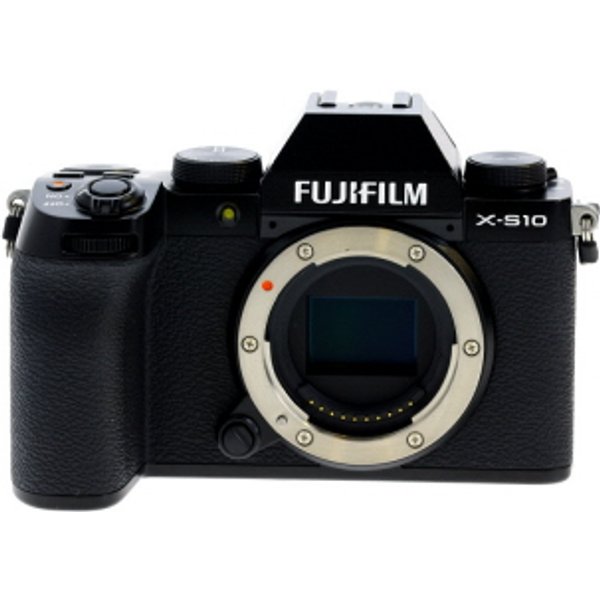
Three editorial starting points—not boxed retailer bundles. The camera and lens images depict separate products. Select whether you already own the camera; see verified retailer offers where available.

Compact constant f/2.8 everyday zoom with native Fujifilm X-mount fitting.
Trade-off to considerNo optical stabilization in the lens; the wide end may be tight indoors.

Bright APS-C portrait prime giving approximately 84mm-equivalent framing.
Trade-off to considerA fixed short-telephoto field of view is restrictive for groups and small rooms.
Prices and stock can change. KEH offers require a current source feed; eBay and MPB listings are independently freshness-checked. Seller condition, accessories and final totals must be verified at checkout. Retailer links are sponsored; qualifying purchases may earn us a commission. We do not sell or ship cameras.
Start shopping with compatibility confirmed
Find a lens for your Fujifilm X-S10
Choose how you shoot to see a prioritized, native-mount shortlist with available retailer offers. The Finder retains this camera selection. Camera bodies are context for selecting compatible lenses and complete kits, not a separate storefront.
Building the kit
Add capabilities, not duplicate focal lengths.
A practical Fujifilm X-S10 lens kit normally begins with one general-purpose lens that covers the photographs made most often. A second lens should add a genuine capability—such as a brighter aperture, wider framing, macro focusing or longer telephoto reach—rather than duplicating the first lens.
Compatibility
The camera uses the native Fujifilm X mount. This is an APS-C camera with an approximate 1.5× crop factor. Full-frame lenses using the native mount generally remain compatible, but their field of view appears narrower than on a full-frame body. Autofocus, stabilization, firmware and special operating limitations should still be confirmed for the exact camera-and-lens combination.
Independent research and buying comparison
Which lens is right for the Fujifilm X-S10?
The Fujifilm X-S10 is a 26.1MP APS-C X-mount camera with five-axis in-body stabilization. Its appeal is a compact, versatile system rather than maximizing a headline sensor resolution. Since Fujifilm has discontinued the body, used-camera condition and future lens value are particularly important. Native XF, XC and supported third-party X-mount lenses offer different balances of speed, size, stabilization and reach.
| Lens or option | Main advantage | Important compromise | Best reason to choose it |
|---|---|---|---|
| Sigma 18–50mm f/2.8 DC DN — Fujifilm X | Compact constant f/2.8 zoom with useful normal-range coverage for daily photography. | No optical stabilization in the lens; it starts at 18mm rather than 16mm. | Travel and indoor subjects where aperture and compactness beat all-in-one reach. |
| Tamron 17–70mm f/2.8 Di III-A VC RXD — Fujifilm X | Longer constant f/2.8 range with built-in VC stabilization. | Larger than small everyday zooms, with more weight on the compact X-S10. | Family events and handheld travel when you want one brighter, extended-range lens. |
| Tamron 18–300mm f/3.5–6.3 VC VXD — Fujifilm X | Huge travel range in a single lens, useful when changing lenses is impractical. | Variable f/3.5–6.3 aperture and greater size; not a substitute for a bright event lens. | Outdoor travel, zoo trips and daylight subjects at widely varying distances. |
| Viltrox AF 56mm f/1.4 XF | Fast short telephoto portrait angle (approximately 84mm equivalent). | Too narrow as a general-purpose indoor group lens, with fixed framing. | Individual portraits, detail isolation and controlled working distances. |
A lighter everyday kit
The 18–50mm f/2.8 offers a normal everyday span with a useful constant aperture. On the X-S10, that becomes roughly a 27–75mm full-frame-equivalent field of view. It is good for family, travel and casual events, but 18mm may remain too tight for the smallest interiors. The X-S10 provides IBIS, which can reduce camera shake; it does not change the subject-freezing shutter speed needed for children or performers.
One lens for an entire holiday
The 18–300mm covers everything from moderate wide angle to very distant framing, reducing sensor exposure from repeated lens changes. The compromise comes when light fades: f/6.3 at the long end often requires greater ISO or slower shutter speed than a constant f/2.8 zoom. The Tamron 17–70mm f/2.8 is a middle ground for travel combined with people photography, but its physical size changes the balance of a compact body.
Portraits and upgrading a used X-S10
A 56mm f/1.4 can produce flattering isolated portraits at a reasonable distance but may be unusably tight in a small living room. If your most-used photos are environmental portraits, a wider prime or standard zoom may be better. Since the body is discontinued, inspect sensor, hot shoe, battery door, IBIS behavior, rear screen and grips, and compare the lens cost with its future usefulness on other Fujifilm X bodies.
The editorial verdict
For a smaller all-purpose X-S10 kit, compare the Sigma 18–50mm f/2.8 against the Tamron 17–70mm f/2.8: compactness versus extra reach and VC. The 18–300mm is for outdoor convenience rather than dim-event performance; add the Viltrox 56mm f/1.4 only for deliberate portraits. Do not choose solely from the current used-offer ranking.
Sources, verification and editorial methodology
The X-S10 sensor, mount, stabilization and discontinuation status follow Fujifilm's manufacturer information. The comparisons reflect optical framing, aperture and practical carrying trade-offs, not independently measured lens resolution. Merchant availability and grades need verification at checkout.
Primary research and manufacturer documentation:
Continue researching:
Lens research
Research the right lens before comparing prices.
Start with mount and sensor compatibility, then compare focal length, aperture, condition and current used availability.
Confirm compatibility
Separate physical mount fit from sensor coverage, autofocus and stabilization behavior.
How to know what lenses fit your camera →Evaluate a used lens
Compare optical condition, operation, accessories, seller protections and the actual used-market price.
Used-lens buying checklist →Native or adapted?
Adapter compatibility can affect autofocus, stabilization, firmware and handling.
Native vs adapted lenses →Browse the full system
The recommendations below are a starting point. The full catalog contains other native options at different focal lengths and prices.
Browse all Fujifilm X lenses →Compare current buying guides →
Current recommendations
Best lenses for Fujifilm X-S10 by use case
Recommendations are based on native mount compatibility, photography use and the latest imported KEH listings. Verify final stock, condition and price at the retailer.
Sigma 18-50mm f/2.8 DC DN C (Contemporary) Autofocus APS-C Lens
Balances native compatibility, current availability and practical used-market value.
View historical used-price research
Used-price context: 41 tracked observations since Oct 4, 2026. The lowest available used price across those snapshots ranged from $498 to $646. The latest tracked starting price is $42 lower than the first tracked snapshot.

Tamron 18-300mm f/3.5-6.3 Di III-A VC VXD APS-C Lens
Provides a lower-priced native lens option in the current catalog.
View historical used-price research
Used-price context: 41 tracked observations since Oct 4, 2026. The lowest available used price across those snapshots ranged from $535 to $606. The latest tracked starting price is $10 lower than the first tracked snapshot.

Viltrox 85mm f/1.8 PFU RBMH STM APS-C Lens
Prioritizes portrait-friendly focal lengths and brighter apertures.
View historical used-price research
Used-price context: 49 tracked observations since Jul 27, 2026. The lowest available used price across those snapshots ranged from $226 to $246. The latest tracked starting price is $20 lower than the first tracked snapshot.

Fujifilm XF 16-80mm f/4 R OIS WR Fujinon Lens for APS-C Format X-Mount
Prioritizes flexible framing or a practical everyday focal length.
View historical used-price research
Used-price context: 60 tracked observations since Jul 27, 2026. The lowest available used price across those snapshots ranged from $415 to $541. The latest tracked starting price is $103 higher than the first tracked snapshot.

Tamron 150-500mm f/5-6.7 Di III VC VXD APS-C Lens
Prioritizes longer telephoto reach for distant subjects.
View historical used-price research
Used-price context: 60 tracked observations since Jul 27, 2026. The lowest available used price across those snapshots ranged from $1,052 to $1,499. The latest tracked starting price is $447 lower than the first tracked snapshot.

Viltrox AF 56mm f/1.4 XF STM ED IF APS-C Lens
Prioritizes lenses scored for available-light photography and brighter-aperture flexibility.
View historical used-price research
Used-price context: 60 tracked observations since Jul 27, 2026. The lowest available used price across those snapshots ranged from $173 to $195. The latest tracked starting price is $22 lower than the first tracked snapshot.
Frequently asked questions
Choosing lenses for Fujifilm X-S10.
How many current lenses are matched to the Fujifilm X-S10?
The present catalog identifies 138 native lens families. That number changes as the KEH feed is updated.
Should I buy a prime or zoom for the Fujifilm X-S10?
A prime is often smaller or brighter. A zoom offers more framing flexibility. The better choice depends on the photography purpose and whether changing lenses is practical.
Is the lowest KEH condition grade always the best value?
Not necessarily. Compare the savings with the next condition grade and review the exact accessories and condition description.