Nikon Z camera guide
Best lenses for Nikon Z5 in 2026
The original Nikon Z5 is a 24.3-megapixel full-frame FX mirrorless camera with native Z-mount compatibility, five-axis in-camera vibration reduction, 273-point hybrid autofocus and two SD card slots. It offers an approachable used entry to full-frame Nikon Z photography, especially for portraits, travel and general stills. It is not the newer Z5II, and its video capabilities have different limitations from current models. The lens decision matters as much as the body: start with the photographs you want to make, then select an FX standard zoom or prime before adding telephoto or close-up specialization.
Start shopping with compatibility confirmed
Find a lens for your Nikon Z5
Choose how you shoot to see a prioritized, native-mount shortlist with available retailer offers. The Finder retains this camera selection.
Building the kit
Add capabilities, not duplicate focal lengths.
A practical entry kit for Nikon Z5 starts with one FX standard zoom for travel and family photographs. Compare compact f/4 options with the faster but heavier NIKKOR Z 24–70mm f/2.8 S II if indoor movement and professional events justify f/2.8 throughout the range. A Z 50mm f/1.4 can add a brighter, portable normal field of view when a zoom is not fast enough. A Tamron 28–75mm f/2.8 G2 for Nikon Z may be a reasonable alternative, but 28mm is less wide than 24mm, and the Sony E version is not natively compatible. Choose telephoto focal length by actual working distance rather than marketing tiers.
Compatibility
Nikon Z5 uses the native Nikon Z full-frame FX mount. Native Z FX lenses use the full sensor, while Z DX lenses can mount but generally cause a DX-crop image area. Nikon F-mount lenses may be adapted using a compatible FTZ/FTZ II adapter, with lens-specific autofocus and feature restrictions; an F-mount lens is not directly mountable without an adapter. Nikon’s sensor-shift in-camera VR is intended to help with camera shake, not moving subjects. Verify third-party Nikon Z mount versions, firmware and camera support.
Independent research and buying comparison
Which lens is right for the Nikon Z5?
The original Nikon Z5 is an FX full-frame body, so the priority is selecting a lens that uses its sensor sensibly and balances still-image applications, weight and budget. A compact f/4 zoom is often the better first purchase for daylight travel than an expensive heavy f/2.8 lens; available-light events may reverse that choice. Be careful not to confuse the original Z5 with the later Z5II or full-frame Z lenses with DX-only optics.
| Lens or option | Main advantage | Important compromise | Best reason to choose it |
|---|---|---|---|
| NIKKOR Z 24–70mm f/4 S | Full-frame standard coverage with relatively portable f/4 handling. | One stop slower than f/2.8, with less flexibility for moving subjects indoors. | Travel, landscape, family portraits and a strong first general-purpose lens. |
| NIKKOR Z 24–70mm f/2.8 S II | Constant f/2.8 and internal zooming for events, low light and balanced rigs. | Premium price and more bulk than a compact f/4 option. | Frequent event work when an extra stop makes a real difference to shutter speed. |
| Tamron 28–75mm f/2.8 G2 — Nikon Z | Constant f/2.8 and a lighter alternative to some professional zooms. | Starts at 28mm, not 24mm; framing feels substantially tighter in confined spaces. | Portrait and event photographers who value f/2.8 and do not require a wide 24mm end. |
| NIKKOR Z 50mm f/1.4 | Bright standard prime for people, natural-light portraits and subject separation. | One field of view; it cannot replace a wide zoom for small rooms or travel groups. | Indoor photography where zoom flexibility is less essential than a faster aperture. |
Affordable first full-frame kit
The Nikon Z 24–70mm f/4 S is a sensible baseline when photography centers on travel, landscapes or static portraits. If low-light movement is rare, an f/2.8 zoom adds cost and weight without necessarily increasing the number of successful photographs. Use the 24mm wide end before deciding that a 28mm-starting alternative is suitable for hotel rooms, architecture and indoor groups.
Events and indoor subjects
Moving from f/4 to f/2.8 lets you approximately double shutter speed at a fixed ISO in similar lighting. That is helpful for subjects that move, while Nikon's body-based VR targets camera shake rather than subject motion. A 50mm f/1.4 enables still more exposure headroom but sacrifices flexible framing. Compare practical shooting distances before prioritizing the biggest possible aperture.
Buying Z versus adapted F-mount lenses
Native Nikon Z FX lenses give full-frame coverage without an adapter. Some older F-mount lenses work through FTZ or FTZ II, but autofocus and control compatibility vary with lens generation. A low used price may cease to be attractive after adapter costs and performance limitations. Z DX lenses may mount but generally require the camera's DX crop, reducing the effective image dimensions.
The editorial verdict
For most original Z5 owners building a first kit, the 24–70mm f/4 S is a strong starting comparison, with a 50mm f/1.4 as a distinct low-light upgrade. Choose an f/2.8 zoom only when indoor action or event assignments justify its added cost and weight. The automatically supplied product cards elsewhere on the page can show other compatible current offers; compatibility and stock do not establish editorial superiority.
Sources, verification and editorial methodology
Camera specifications follow Nikon's original Z5 documentation, with mount and lens choices assessed from focal coverage, aperture and real shooting needs. This is independent editorial interpretation of published specifications, not an assertion of first-hand camera or optical lab testing. Prices and merchant conditions can change. Always check that a listing is for the original Z5 and the exact Nikon Z-mount lens.
Primary research and manufacturer documentation:
Continue researching:
Lens research
Research the right lens before comparing prices.
Start with mount and sensor compatibility, then compare focal length, aperture, condition and current used availability.
Confirm compatibility
Separate physical mount fit from sensor coverage, autofocus and stabilization behavior.
How to know what lenses fit your camera →Evaluate a used lens
Compare optical condition, operation, accessories, seller protections and the actual used-market price.
Used-lens buying checklist →Native or adapted?
Adapter compatibility can affect autofocus, stabilization, firmware and handling.
Native vs adapted lenses →Browse the full system
The recommendations below are a starting point. The full catalog contains other native options at different focal lengths and prices.
Browse all Nikon Z lenses →Compare current buying guides →
Current recommendations
Best lenses for Nikon Z5 by use case
Recommendations are based on native mount compatibility, photography use and the latest imported KEH listings. Verify final stock, condition and price at the retailer.

Nikon Nikkor Z 24-70mm f/4 S Autofocus FX Lens
Balances native compatibility, current availability and practical used-market value.
View historical used-price research
Used-price context: 50 tracked observations since Jul 27, 2026. The lowest available used price across those snapshots ranged from $437 to $496. The latest tracked starting price is $55 lower than the first tracked snapshot.

Nikon Nikkor Z 24-50mm f/4-6.3 Autofocus FX Lens
Provides a lower-priced native lens option in the current catalog.
View historical used-price research
Used-price context: 31 tracked observations since Oct 4, 2026. The lowest available used price across those snapshots ranged from $177 to $200. The latest tracked starting price is $8 higher than the first tracked snapshot.
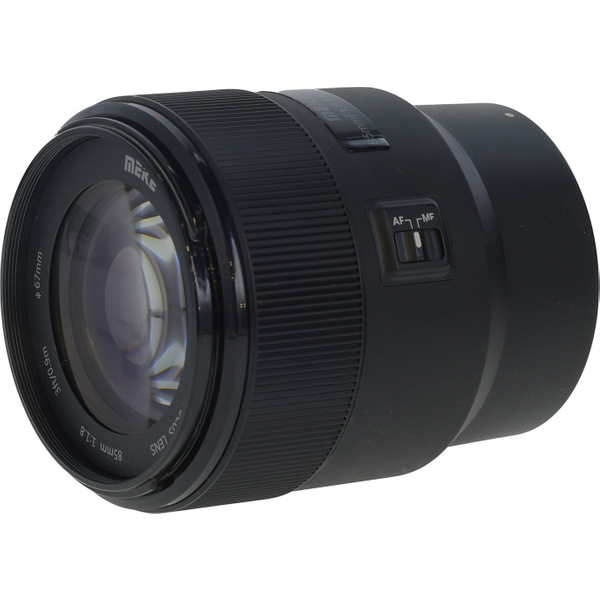
Meike 85mm f/1.8 FF STM Full-Frame Autofocus Lens
Prioritizes portrait-friendly focal lengths and brighter apertures.
View historical used-price research
Used-price context: 3 tracked observations since Nov 1, 2026. The lowest available used price across those snapshots ranged from $122 to $122. The latest tracked starting price is unchanged from the first tracked snapshot.

Nikon Nikkor Z 24-200mm f/4-6.3 VR Autofocus FX Lens
Prioritizes flexible framing or a practical everyday focal length.
View historical used-price research
Used-price context: 50 tracked observations since Jul 27, 2026. The lowest available used price across those snapshots ranged from $375 to $679. The latest tracked starting price is $304 lower than the first tracked snapshot.

Nikon Nikkor Z 180-600mm f/5.6-6.3 VR Full-Frame Autofocus Lens
Prioritizes longer telephoto reach for distant subjects.
View historical used-price research
Used-price context: 31 tracked observations since Oct 4, 2026. The lowest available used price across those snapshots ranged from $1,795 to $1,867. The latest tracked starting price is $66 lower than the first tracked snapshot.

Nikon Nikkor Z 50mm f/1.4 FX Autofocus Lens
Prioritizes lenses scored for available-light photography and brighter-aperture flexibility.
View historical used-price research
Used-price context: 31 tracked observations since Oct 4, 2026. The lowest available used price across those snapshots ranged from $471 to $493. The latest tracked starting price is $20 higher than the first tracked snapshot.
What to check before purchasing
- Check whether the particular Z5 listing is the original Z5 or the newer Z5II; do not compare specifications across generations as though they are identical.
- If shooting mostly landscapes or travel, lens size, 24mm coverage and condition can be more important than the most expensive f/2.8 zoom.
- For indoor portraits and events, compare an f/1.4 normal prime against an f/2.8 zoom based on working distance and required framing flexibility.
- For used bodies, test in-body VR, focus, sensor cleanliness, both SD slots, viewfinder, buttons, USB power behavior and mount condition.
- Check any adapted Nikon F lens for AF motor compatibility and FTZ firmware before relying on it for assignments.
- Verify used lens optics, autofocus, listed accessories, warranty and final merchant price before buying.
Frequently asked questions
Choosing lenses for Nikon Z5.
Do Nikon Z DX lenses fit the Z5?
They can mount, but the Z5 generally records a cropped DX image area rather than using its full FX sensor.
Can I attach Nikon F-mount lenses to a Z5?
A compatible FTZ or FTZ II mount adapter is needed; autofocus and other functions depend on the individual F lens.
Does the original Nikon Z5 have in-body stabilization?
Yes. Nikon specifies five-axis in-camera VR, with benefits depending on lens and shooting conditions.
Is the Z5 the same camera as the Z5II?
No. The Z5II is a separate model and should be researched and priced separately.