Camera-specific lens buying guide
Best Travel Lenses for Canon EOS R8: RF Used Buying Guide
The Canon EOS R8 is a compact full-frame travel body, but adding a large or unsuitable lens can undermine its portability. A good one-lens travel choice covers the subjects you expect to photograph; another photographer may do better with a small standard zoom and a bright prime for evenings. This guide connects native RF fit, range and aperture decisions to eligible used-buying options, without conflating RF-S crop-format lenses with full-frame coverage.
Mirrorless Lens World editorial research uses camera-compatibility records, manufacturer-described lens specifications and refreshed retailer listings. Products here have not been represented as personally hands-on tested. Affiliate links may earn us a commission at no extra cost to you.
The short answer
What should you buy first?
Start with a full-frame RF standard zoom if you want to travel with one lens. A 24–105mm-style range offers more reach for architectural details and people; a compact, slower zoom may be lighter or more affordable; and a constant-f/4 alternative offers a predictable maximum aperture. If indoor people and night scenes matter more than range, consider pairing a general zoom with a small RF prime.
Compatible, currently eligible buying options
Compare the starting prices and trade-offs
These are camera-compatible lens families ranked from the requested photography use and budget. The figures are starting prices for eligible individual listings, not a guarantee that every condition grade is available at that price. Confirm stock and terms before buying.
| Lens | Focal length | Sensor coverage | Starting offer | Retailers |
|---|---|---|---|---|
| Canon RF 24-105mm f/4-7.1 IS STM Full Frame Lens | 24–105mm | Full Frame | $281 | KEH |
| Canon RF 24-240mm f/4-6.3 IS USM Full-Frame Lens | 24–240mm | Full Frame | $651 | KEH + eBay |
| Canon RF 24-70mm f/2.8 L IS USM Full-Frame Lens | 24–70mm | Full Frame | $2,043 | KEH |
| Canon RF 50mm f/1.8 STM Full-Frame Lens | 50mm | Full Frame | $127 | KEH + eBay |
| Canon RF 24-105mm f/4 L IS USM Full-Frame Lens | 24–105mm | Full Frame | $630 | KEH + eBay |
Original comparative buying analysis
Head-to-head: which trade-off makes sense?
These comparisons explain distinct purchase decisions using documented focal lengths, aperture characteristics and camera compatibility. They are not numerical optical-test results, and the precise retailer listings still need inspection.
Canon RF 24–105mm f/4–7.1 IS STM vs RF 24–105mm f/4 L IS USM
Choose the first when: Choose the f/4–7.1 STM model if a compact, generally less expensive daylight travel zoom is your priority.
Choose the alternative when: Consider the constant-f/4 L model if you regularly use the long end in reduced light and can justify its different bulk and cost.
Both share a 24–105mm nominal range; the major buying distinction is a constant f/4 maximum aperture versus a variable maximum aperture narrowing toward 105mm. Lens model, weight and return policy matter as much as the shared range.
What to check before paying: The R8 lacks in-body stabilization, so compare each listing's lens IS status. Optical IS does not freeze people moving at dusk.
An RF 24–105mm zoom vs a small RF 35mm or 50mm prime
Choose the first when: Choose a zoom for destination changes, architectural details and people at unpredictable distances without changing lenses.
Choose the alternative when: Choose a compact prime when evenings, candid people or lighter intentional photography dominate your itinerary.
A small prime can offer a significantly wider maximum aperture than a slower travel zoom but locks you into one focal length. Carrying both may cover different needs rather than duplicating a lens.
What to check before paying: Prioritize the subjects you really photograph. Review the exact used model, focal length, stabilization and whether total two-lens cost fits your trip budget.

Choice 01 · Everyday travel zoom
Canon RF 24-105mm f/4-7.1 IS STM Full Frame Lens
Its 24–105mm range covers useful everyday framing from wide scenes toward people and details. Choose the range around your actual itinerary, not just the largest possible maximum focal length.
Important trade-off: A shorter zoom may require another lens for wildlife or distant details. Compare weight, stabilization and the exact included accessories.

Choice 02 · Extended-range travel zoom
Canon RF 24-240mm f/4-6.3 IS USM Full-Frame Lens
Its 24–240mm range reduces the need to change lenses for distant details while traveling. Choose the range around your actual itinerary, not just the largest possible maximum focal length.
Important trade-off: Extended zoom ratios may trade maximum aperture, size or handling for convenience. Compare weight, stabilization and the exact included accessories.

Choice 03 · Everyday travel zoom
Canon RF 24-70mm f/2.8 L IS USM Full-Frame Lens
Its 24–70mm range covers useful everyday framing from wide scenes toward people and details. Choose the range around your actual itinerary, not just the largest possible maximum focal length.
Important trade-off: A shorter zoom may require another lens for wildlife or distant details. Compare weight, stabilization and the exact included accessories.

Choice 04 · Compact travel companion
Canon RF 50mm f/1.8 STM Full-Frame Lens
At 50mm, this fixed-focal-length option suits a deliberate, lighter travel setup when you know your preferred framing. It can complement a standard zoom rather than duplicate its entire range.
Important trade-off: You cannot zoom without moving or cropping. Decide whether its aperture and size justify carrying a second lens; inspect glass and autofocus before departure.
Choice 05 · Everyday travel zoom
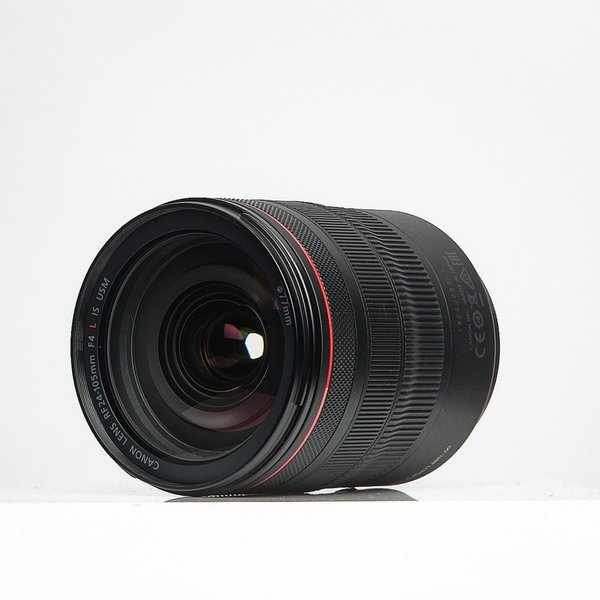
Canon RF 24-105mm f/4 L IS USM Full-Frame Lens
Its 24–105mm range covers useful everyday framing from wide scenes toward people and details. Choose the range around your actual itinerary, not just the largest possible maximum focal length.
Important trade-off: A shorter zoom may require another lens for wildlife or distant details. Compare weight, stabilization and the exact included accessories.

Choice 06 · Everyday travel zoom
Canon RF 28-70mm f/2 L USM Full-Frame Lens
Its 28–70mm range covers useful everyday framing from wide scenes toward people and details. Choose the range around your actual itinerary, not just the largest possible maximum focal length.
Important trade-off: A shorter zoom may require another lens for wildlife or distant details. Compare weight, stabilization and the exact included accessories.
Buying analysis
How to choose the right option
One versatile zoom or a compact two-lens travel kit?
A 24mm short end gives breathing room for city scenes and interiors. The difference between a 70mm and 105mm long end becomes noticeable when you cannot get physically closer to a subject. But a lens with more range should not automatically win: compare packed dimensions and total carrying weight against how frequently you actually need telephoto framing.
A small, bright 35mm or 50mm RF prime complements a daylight zoom when the evening itinerary includes cafes, people or indoor activities. This setup adds a lens change but may cost less used than one ambitious professional zoom. Make the decision around the trip, not a theoretical all-purpose kit.
Full-frame coverage, lens aperture and stabilization
The R8 uses Canon's RF mount with a full-frame sensor. A compatible RF-S crop-format lens is not an equivalent full-frame substitute; expect image-area limitations when choosing one. EF optics need an appropriate RF adapter, so this shortlist primarily presents native RF options.
A variable-aperture travel zoom can work well in daylight but admits less light toward the long end. A constant f/4 zoom maintains its maximum aperture as you zoom, while a faster prime can help with moving people after dark. Check stabilization carefully: the R8 lacks in-body image stabilization, so an optically stabilized lens can be particularly relevant for handheld static scenes.
Used travel lens checks before departure
Confirm the complete model and mount, zoom-ring smoothness, electronic communication, autofocus, optical condition and weather-sealing limitations. A damaged zoom mechanism can be more disruptive while traveling than a cosmetic mark. Review the seller's return window early enough to test a used purchase before leaving.
Each recommendation links to the family detail and actual seller listing where available. A used offer may sell out between publication and checkout. Review included caps and hoods alongside shipping and condition grade rather than basing the purchase on the lowest extracted price.
Used-gear purchase checklist
Before you leave for the retailer
A low listed price is only useful when the exact copy meets your condition and compatibility expectations. Compare these five considerations when choosing between offers.
- Model and mount: Confirm the complete manufacturer model, native fit, image coverage and whether a listed variant needs an adapter.
- Glass and operation: Review descriptions of haze, fungus, scratches, autofocus, aperture behavior, stabilization and zoom or focus ring operation as applicable.
- Condition versus savings: Compare actual seller grades, not only the lowest number; a cleaner unit can be a better purchase for a modest premium.
- What's included: Check hood, caps, collar, pouch and filter threads against the specific product listing.
- Total purchase terms: Review shipping, returns, seller protections and availability at checkout. A listing can sell between our feed refresh and your visit.
How we selected these recommendations
We identify native, camera-compatible lens families, evaluate the photography-use signals where applicable, and include only families with an eligible recently imported KEH buying option or qualifying recent eBay listing. Recommendations and starting prices can change with the feed. No fabricated benchmark, laboratory score or personal-testing claim is used.
- Native full-frame RF lens compatibility with the Canon EOS R8
- Travel-relevant wide-to-normal framing and carrying trade-offs
- Fresh eligible KEH/eBay offers rather than static price promises
Read our editorial policy and affiliate disclosure. For used gear condition checks, see our used-lens buying checklist.
Sources and verification
Review responsibility: Mirrorless Lens World Editorial Desk. Technical and purchasing advice was reviewed October 3, 2026. Retailer inventory is checked separately when the page is requested; this date does not assert each seller's offer was re-reviewed manually.
Mount, camera format and adapter guidance can be checked against the manufacturer's own documentation. Individual lens specifications are cross-checked against the imported merchant catalog; actual price and condition must be verified on the destination retailer listing. We do not claim to have personally tested these lenses.
Frequently asked buying questions
Is an RF 24–105mm a useful Canon R8 travel lens?
It can cover wide scenes through moderate telephoto framing without swapping lenses. Compare the exact f/4 or variable-aperture model because their size, price and low-light behavior differ.
Can I use RF-S lenses on a full-frame EOS R8?
Check crop-mode implications carefully. This buying guide prioritizes full-frame RF coverage, which preserves the intended full-frame shooting area.
Does the Canon R8 have in-body stabilization?
No. If handheld static scenes are important, consider the stabilization capability of the particular RF lens, while remembering that it cannot freeze moving people.
Keep comparing compatible lenses
Not finding the preferred price, aperture or focal length? Expand to the full camera-specific shortlist and inspect the exact seller conditions.