Fujifilm X camera guide
Best lenses for Fujifilm X-H2 in 2026
The Fujifilm X-H2 is a high-resolution APS-C X-mount mirrorless camera built around a 40.2-megapixel X-Trans CMOS 5 HR sensor. It is well suited to detailed landscapes, commercial work, architecture and deliberate wildlife or portrait photography when resolution matters. Fujifilm specifies five-axis in-body stabilization rated up to seven stops under test conditions, plus SD UHS-II and CFexpress Type B card slots. Its lens selection should take high-resolution rendering, practical autofocus, balance and the subject matter into account; a premium lens is worthwhile only if its field of view and handling solve a real photographic problem.
Start shopping with compatibility confirmed
Find a lens for your Fujifilm X-H2
Choose how you shoot to see a prioritized, native-mount shortlist with available retailer offers. The Finder retains this camera selection.
Building the kit
Add capabilities, not duplicate focal lengths.
For general photography, start with a capable XF standard zoom before considering a second lens. Fujifilm identifies the XF 16–55mm f/2.8 and a selection of modern primes among lenses capable of taking strong advantage of the X-H2’s 40MP resolution, but this is manufacturer guidance rather than a guarantee that other XF lenses are unsuitable. An XF 23mm or 33mm fast prime helps environmental storytelling and available light; the XF 50–140mm f/2.8 covers portraits and mid-distance action, with its substantial weight and tripod hardware important in used listings. Landscape and architecture work may justify a wide lens before an additional standard prime. Consider the difference between X-H2 resolution-oriented shooting and the stacked-sensor X-H2S for intensive fast action.
Compatibility
The X-H2 uses the Fujifilm X mount and an APS-C sensor with an approximate 1.5x full-frame field-of-view crop. Native Fujinon XF and compatible XC lenses mount directly; Fujifilm GF medium-format lenses are not interchangeable natively. Third-party lenses must explicitly list Fujifilm X as the mount. In-body stabilization may coordinate differently with optically stabilized lenses depending on the lens and camera firmware. Check Fujifilm published lens compatibility and firmware documentation, especially for older lenses and video features.
Independent research and buying comparison
Which lens is right for the Fujifilm X-H2?
The X-H2's 40.2MP APS-C sensor makes fine detail and focusing technique especially relevant. Fujifilm identifies certain XF lenses that can perform particularly well across the frame at their widest aperture, but explicitly says other X-mount lenses still benefit from the sensor's resolution. Native fit is necessary; it is not, by itself, evidence that a lens is ideal for high-resolution landscapes, portrait work or action.
| Lens or option | Main advantage | Important compromise | Best reason to choose it |
|---|---|---|---|
| Fujinon XF 16–55mm f/2.8 R LM WR | Constant f/2.8 professional standard range; included on Fujifilm's high-resolution lens list. | Larger and heavier than compact alternatives, and not optically stabilized. | Events, carefully composed landscapes and demanding everyday work where constant aperture matters. |
| Sigma 18–50mm f/2.8 DC DN — X | Smaller constant-aperture travel option with an everyday focal-length range. | Not among the Fujifilm-branded lenses on Fujifilm's official 40MP list; independent comparisons are needed to assess edge performance. | Travel and walking-around use when portability is more valuable than maximum wide-angle coverage. |
| Fujinon XF 50–140mm f/2.8 R LM OIS WR | Stabilized telephoto reach for portraits, events and distant subjects; also listed in Fujifilm's high-resolution guidance. | Substantial bulk and used configurations may omit the tripod foot. | Portraits and mid-distance action where a standard zoom cannot provide the required framing. |
| Tamron 18–300mm f/3.5–6.3 Di III-A VC VXD — X | Very broad travel range that limits lens changes in the field. | Variable, slower aperture and wide zoom range demand trade-offs; not necessarily the right priority for maximum edge-to-edge fine detail. | Single-lens travel convenience rather than the highest-resolution specialist kit. |
High-resolution landscapes and product detail
For commercial detail or a large landscape print, focus placement, tripod technique, aperture selection and edge rendering matter more than simply buying the longest zoom. Fujifilm's official XF resolving-power list is a useful starting point, but it is a manufacturer selection, not an independent laboratory ranking. Compare published samples at the apertures you actually use. When depth of field matters, stopping down can help up to the point where diffraction begins to reduce fine detail.
Travel and family documentary work
An all-in-one 18–300mm zoom reduces changes outdoors but does not provide the same f/2.8 exposure throughout the range as a faster standard zoom. The Sigma 18–50mm f/2.8 trades range for smaller size and brighter aperture. The right solution depends on whether missed photographs come from lack of reach, poor light or reluctance to carry heavy gear. Fujifilm's X-H2 has IBIS, but subject motion still calls for an appropriate shutter speed.
Portraits and sports
A fast XF prime isolates people at practical distances; the XF 50–140mm f/2.8 allows tighter compositions without moving the camera as often. For serious fast-action sequences, compare the sensor and readout strengths of the X-H2 with the X-H2S rather than presuming both bodies perform identically. Used 50–140mm offers require attention to OIS, autofocus and tripod-collar accessories.
The editorial verdict
For an X-H2 owner who wants to exploit the 40MP sensor for landscape or detail work, shortlist appropriate high-resolution XF primes or the XF 16–55mm f/2.8, then compare measured examples and your shooting conditions. Choose the Sigma 18–50mm for portability or the Tamron 18–300mm for travel reach when those are the dominant goals. The automatically populated six-lens shortlist below reflects market availability and broad use cases; it should not be treated as Fujifilm's 40MP resolution ranking.
Sources, verification and editorial methodology
Model and card specifications were checked against Fujifilm's official X-H2 documentation, including its caveat that lenses outside the high-resolution list can still benefit from 40MP. Editorial judgments distinguish optical priorities, aperture, portability and real-world use. No independent laboratory tests were conducted for this page; current offer prices and grades come from the used inventory feed.
Primary research and manufacturer documentation:
- Fujifilm X-H2 manufacturer overview and high-resolution lens guidance
- Fujifilm 40MP compatible lens clarification
- X-H2 official technical specifications
Continue researching:
Lens research
Research the right lens before comparing prices.
Start with mount and sensor compatibility, then compare focal length, aperture, condition and current used availability.
Confirm compatibility
Separate physical mount fit from sensor coverage, autofocus and stabilization behavior.
How to know what lenses fit your camera →Evaluate a used lens
Compare optical condition, operation, accessories, seller protections and the actual used-market price.
Used-lens buying checklist →Native or adapted?
Adapter compatibility can affect autofocus, stabilization, firmware and handling.
Native vs adapted lenses →Browse the full system
The recommendations below are a starting point. The full catalog contains other native options at different focal lengths and prices.
Browse all Fujifilm X lenses →Compare current buying guides →
Current recommendations
Best lenses for Fujifilm X-H2 by use case
Recommendations are based on native mount compatibility, photography use and the latest imported KEH listings. Verify final stock, condition and price at the retailer.

Tamron 18-300mm f/3.5-6.3 Di III-A VC VXD APS-C Lens
Balances native compatibility, current availability and practical used-market value.
View historical used-price research
Used-price context: 31 tracked observations since Oct 4, 2026. The lowest available used price across those snapshots ranged from $535 to $606. The latest tracked starting price is $34 lower than the first tracked snapshot.

Sigma 18-50mm f/2.8 DC DN C (Contemporary) Autofocus APS-C Lens
Provides a lower-priced native lens option in the current catalog.
View historical used-price research
Used-price context: 31 tracked observations since Oct 4, 2026. The lowest available used price across those snapshots ranged from $498 to $646. The latest tracked starting price is $42 lower than the first tracked snapshot.

Viltrox 85mm f/1.8 PFU RBMH STM APS-C Lens
Prioritizes portrait-friendly focal lengths and brighter apertures.
View historical used-price research
Used-price context: 39 tracked observations since Jul 27, 2026. The lowest available used price across those snapshots ranged from $226 to $246. The latest tracked starting price is $20 lower than the first tracked snapshot.
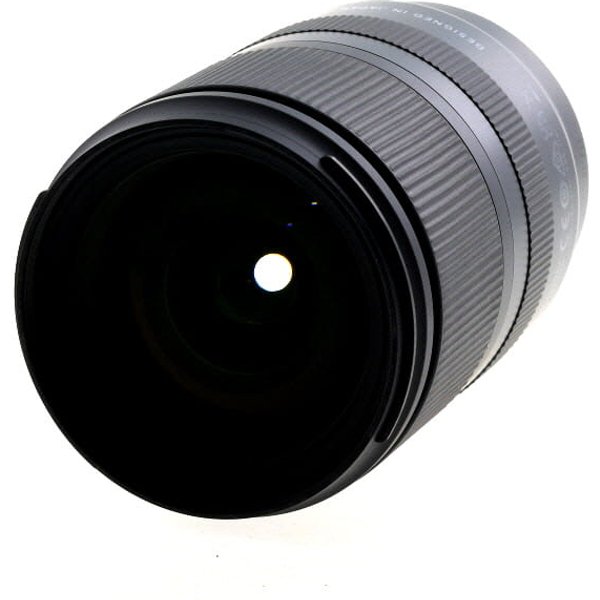
Tamron 17-70mm f/2.8 Di III-A VC RXD APS-C Lens
Prioritizes flexible framing or a practical everyday focal length.
View historical used-price research
Used-price context: 12 tracked observations since Oct 11, 2026. The lowest available used price across those snapshots ranged from $610 to $697. The latest tracked starting price is $49 lower than the first tracked snapshot.

Tamron 150-500mm f/5-6.7 Di III VC VXD APS-C Lens
Prioritizes longer telephoto reach for distant subjects.
View historical used-price research
Used-price context: 50 tracked observations since Jul 27, 2026. The lowest available used price across those snapshots ranged from $1,052 to $1,499. The latest tracked starting price is $447 lower than the first tracked snapshot.

Viltrox AF 56mm f/1.4 XF STM ED IF APS-C Lens
Prioritizes lenses scored for available-light photography and brighter-aperture flexibility.
View historical used-price research
Used-price context: 50 tracked observations since Jul 27, 2026. The lowest available used price across those snapshots ranged from $173 to $195. The latest tracked starting price is $22 lower than the first tracked snapshot.
What to check before purchasing
- When comparing wide and standard lenses, evaluate field of view, aperture, optical behavior at 40MP, autofocus and the camera’s physical balance—not resolution claims alone.
- Landscape and high-detail work may favor stable support and careful focus as much as a more expensive lens; evaluate sample images and independent testing.
- For portraits or events, compare a fast XF prime with the flexible XF 50–140mm f/2.8, accounting for carrying weight and missing tripod feet on used copies.
- Inspect used X-H2 shutter and sensor condition, controls, viewfinder, IBIS, both memory-card slots, mount and firmware behavior.
- Do not substitute X-H2S performance claims for the X-H2; the sensor designs and intended strengths differ.
- Verify actual lens mount, condition grade, supplied hood or tripod collar, seller protection and delivered price before choosing a listing.
Frequently asked questions
Choosing lenses for Fujifilm X-H2.
Are Fujifilm XF lenses compatible with the X-H2?
Yes. Compatible Fujifilm X-mount XF lenses mount natively. The X-H2 is APS-C; verify current firmware and lens-specific functionality.
Does every XF lens need to be on Fujifilm’s 40MP list?
No. The manufacturer highlights models intended to take particular advantage of its high-resolution sensor; lenses not on the list may still be useful.
Is the Fujifilm X-H2 the same as the X-H2S?
No. The X-H2 emphasizes its 40.2MP high-resolution sensor, while the X-H2S uses a different stacked-sensor design aimed particularly at fast capture.
Does the X-H2 stabilize non-OIS lenses?
It has in-body stabilization, though results and controls depend on the lens, camera settings and shooting conditions.